Networks
Networks
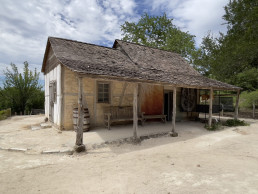
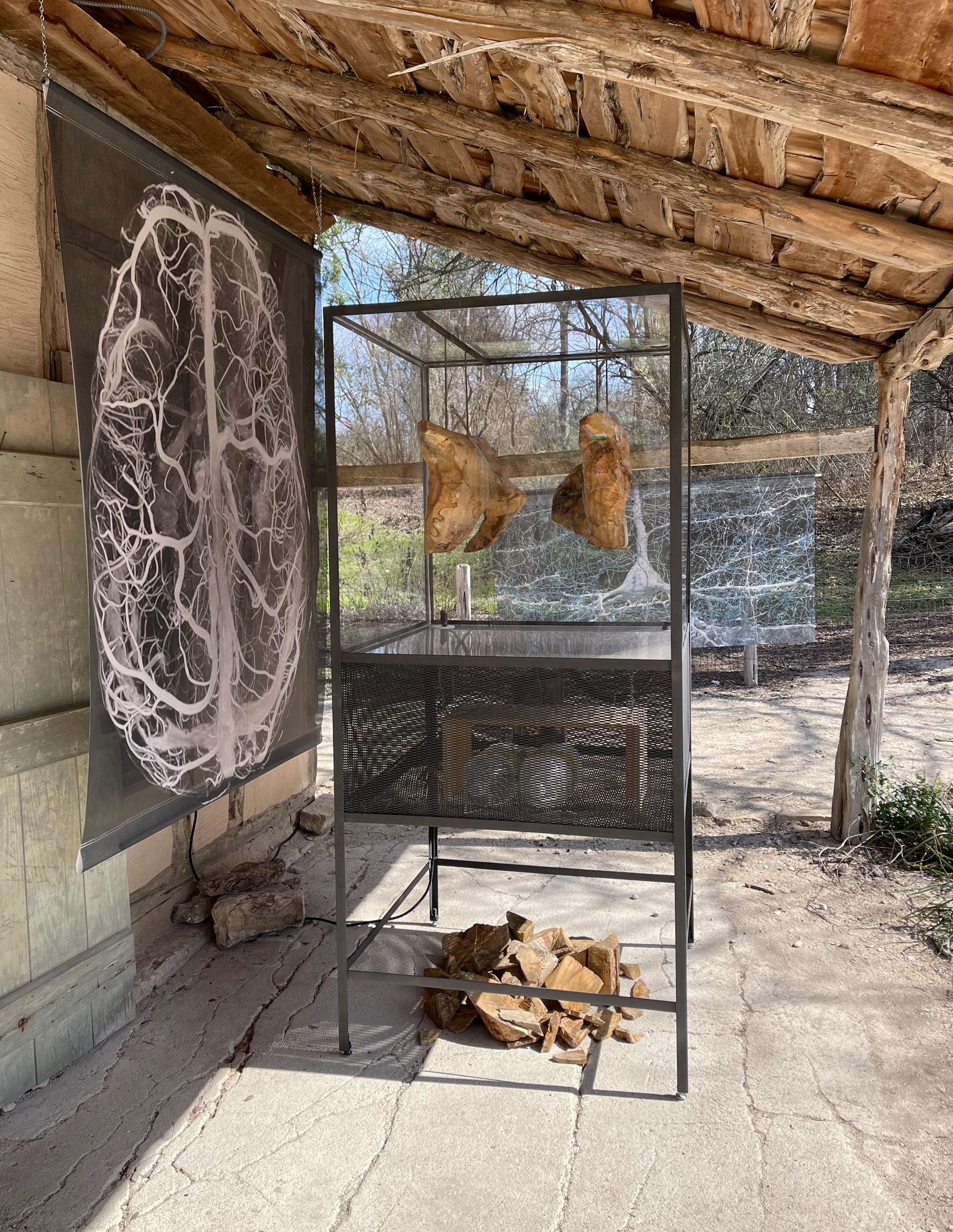
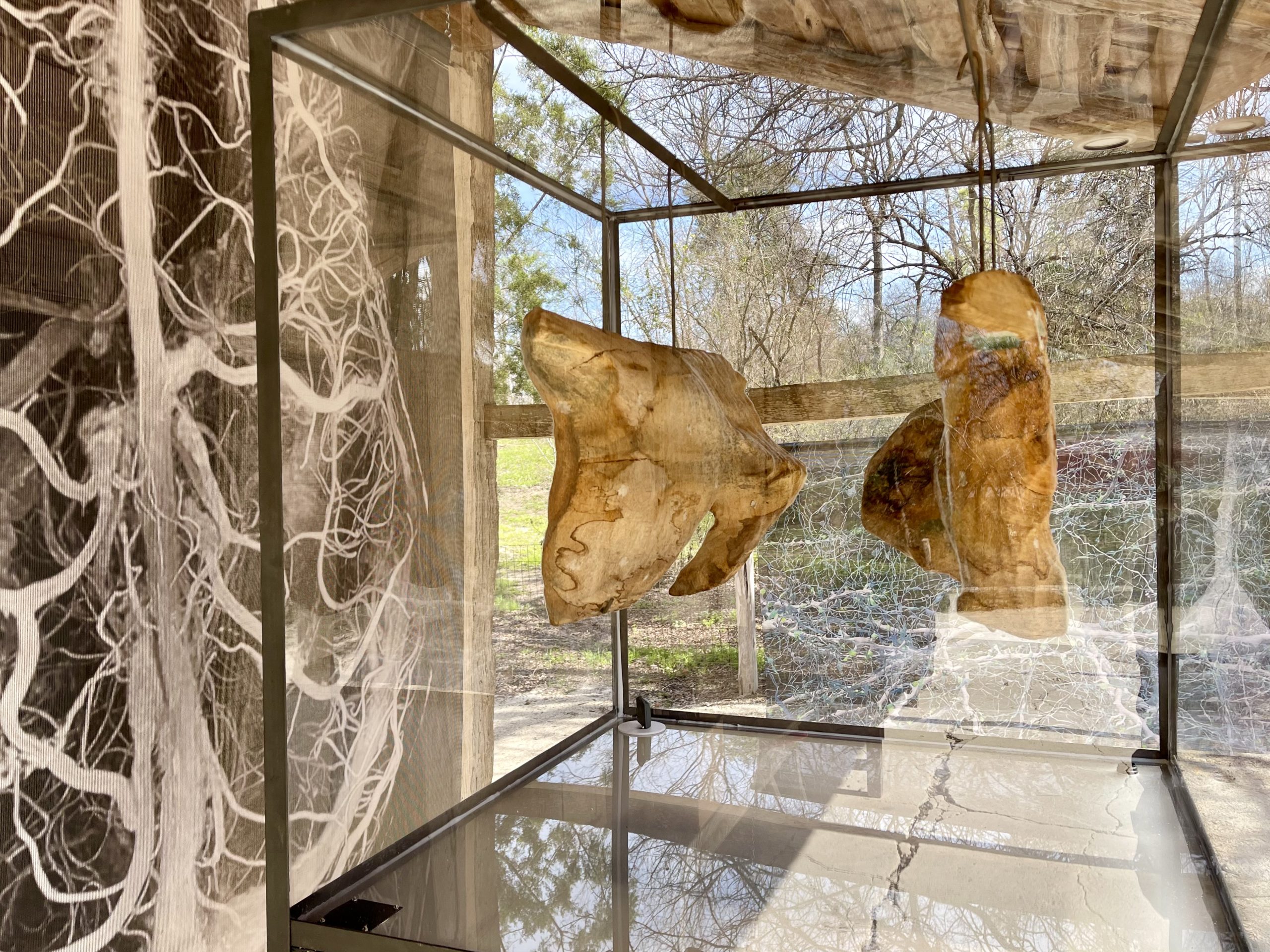
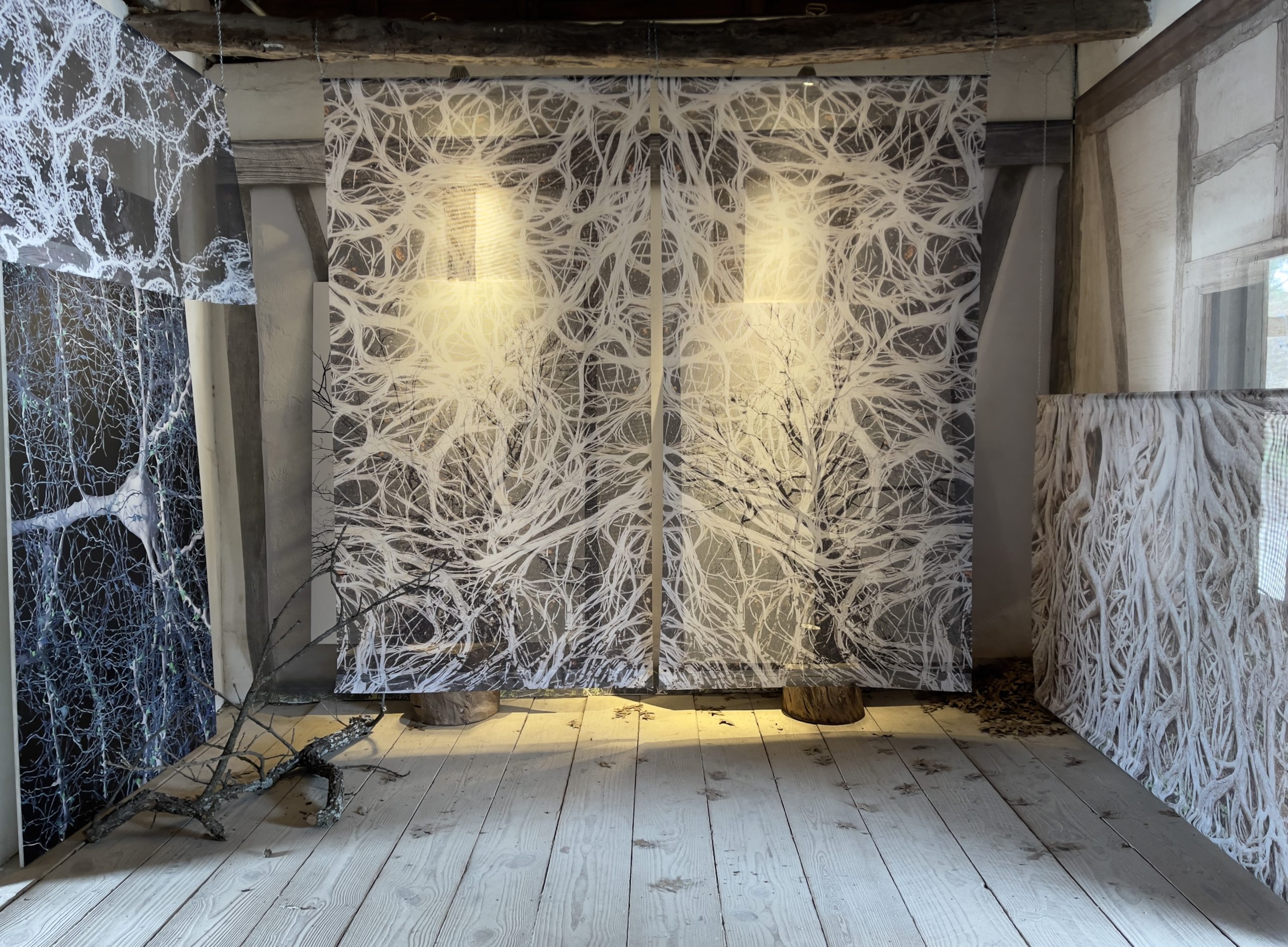
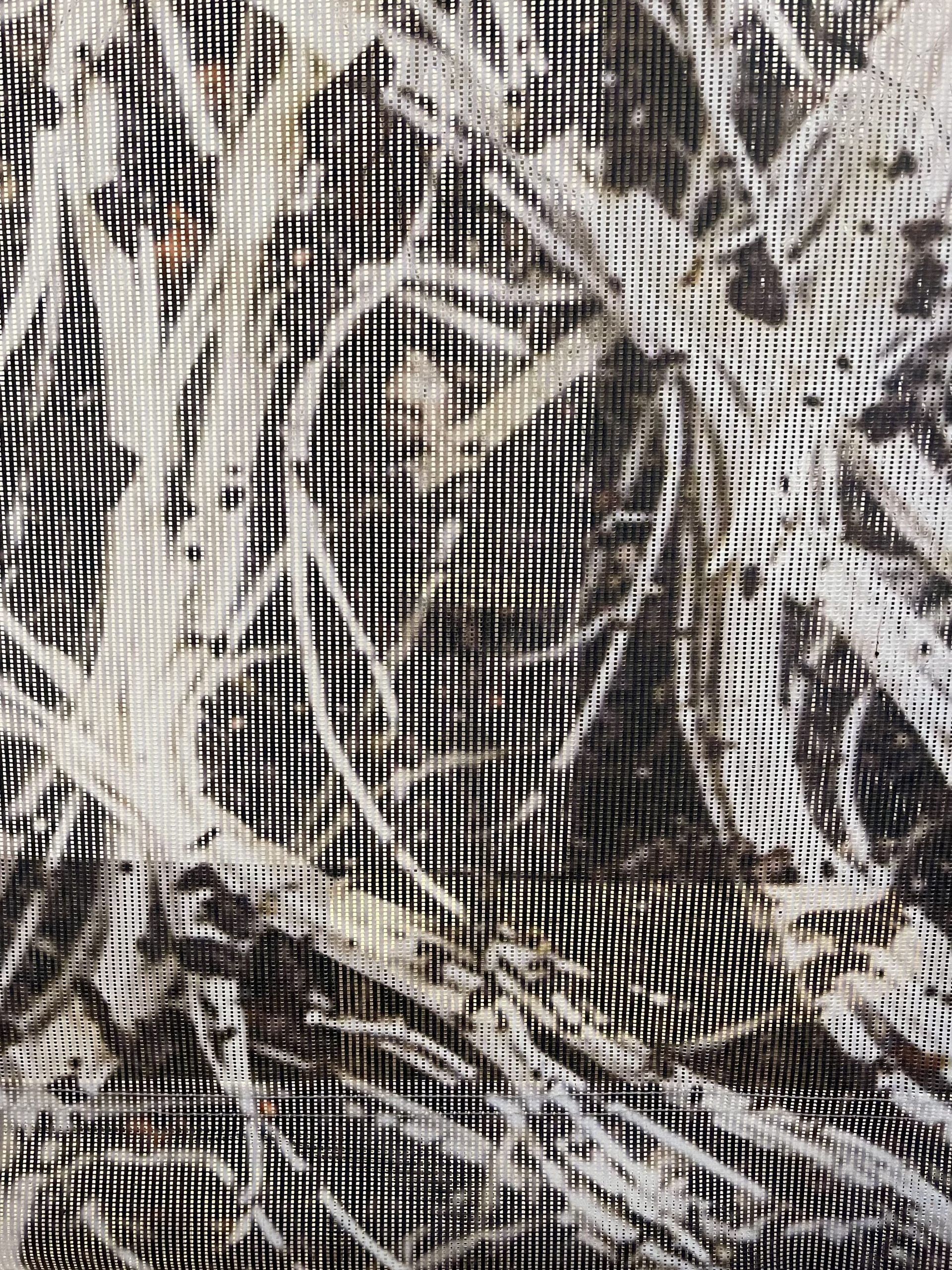
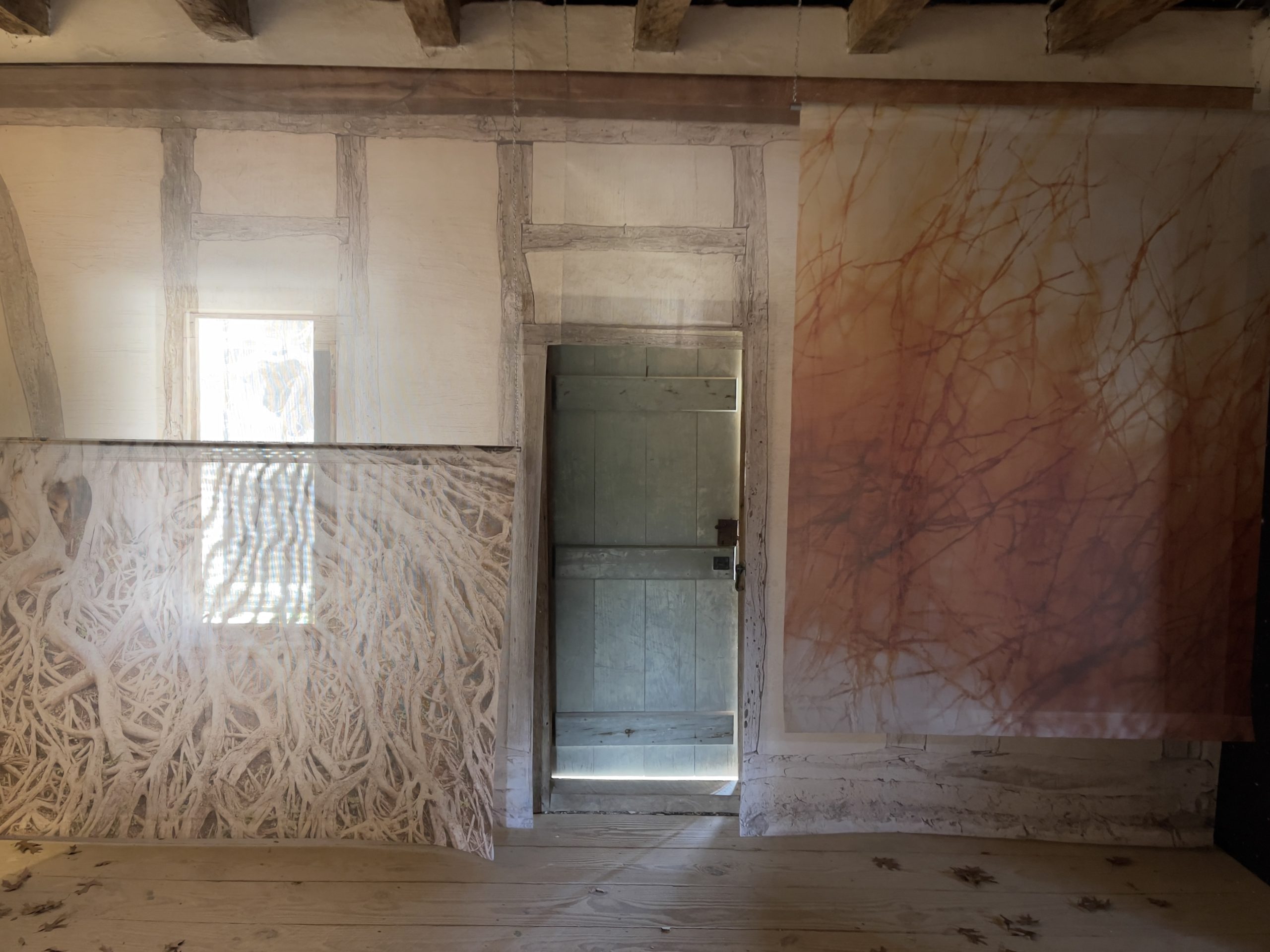
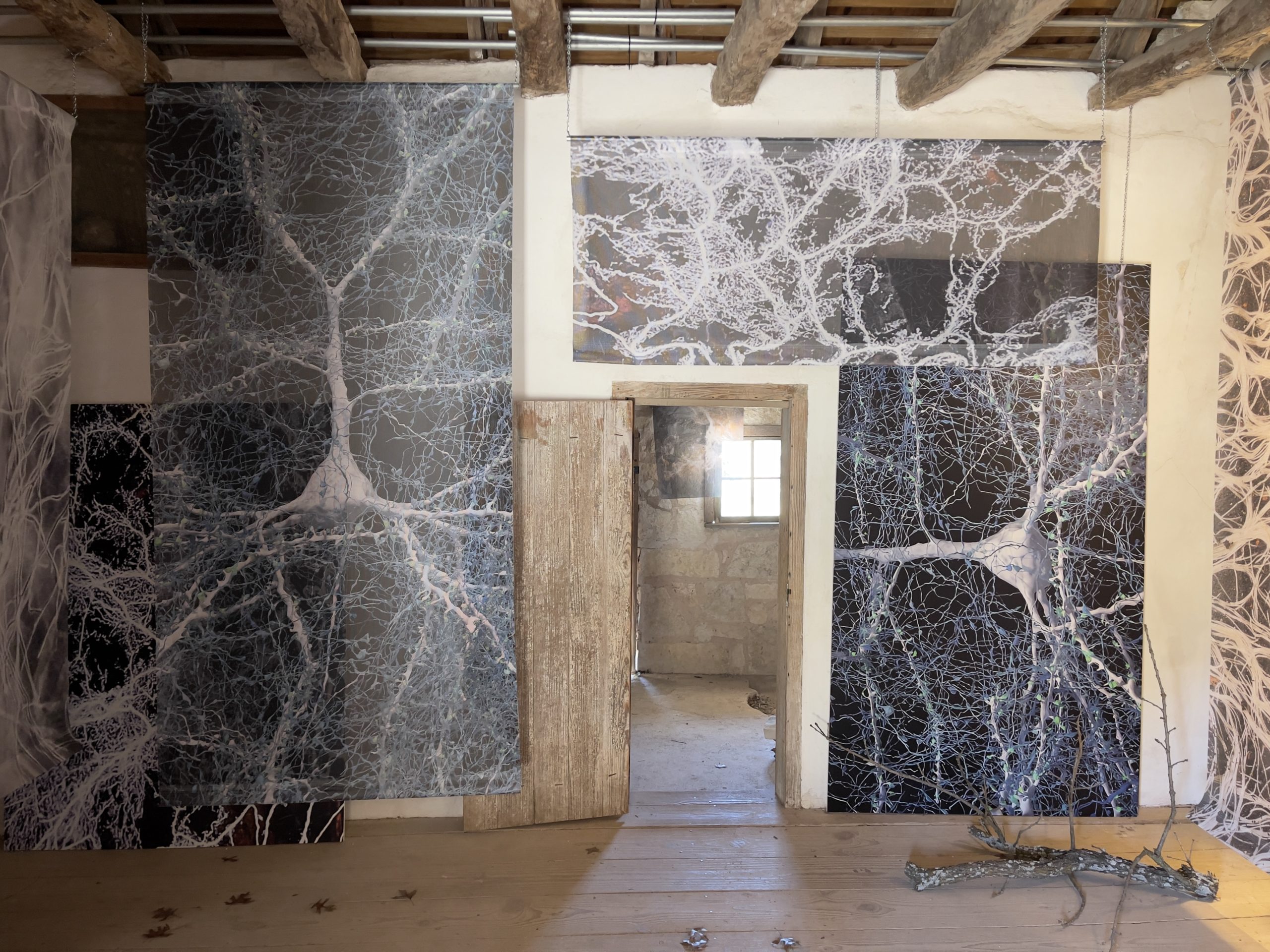
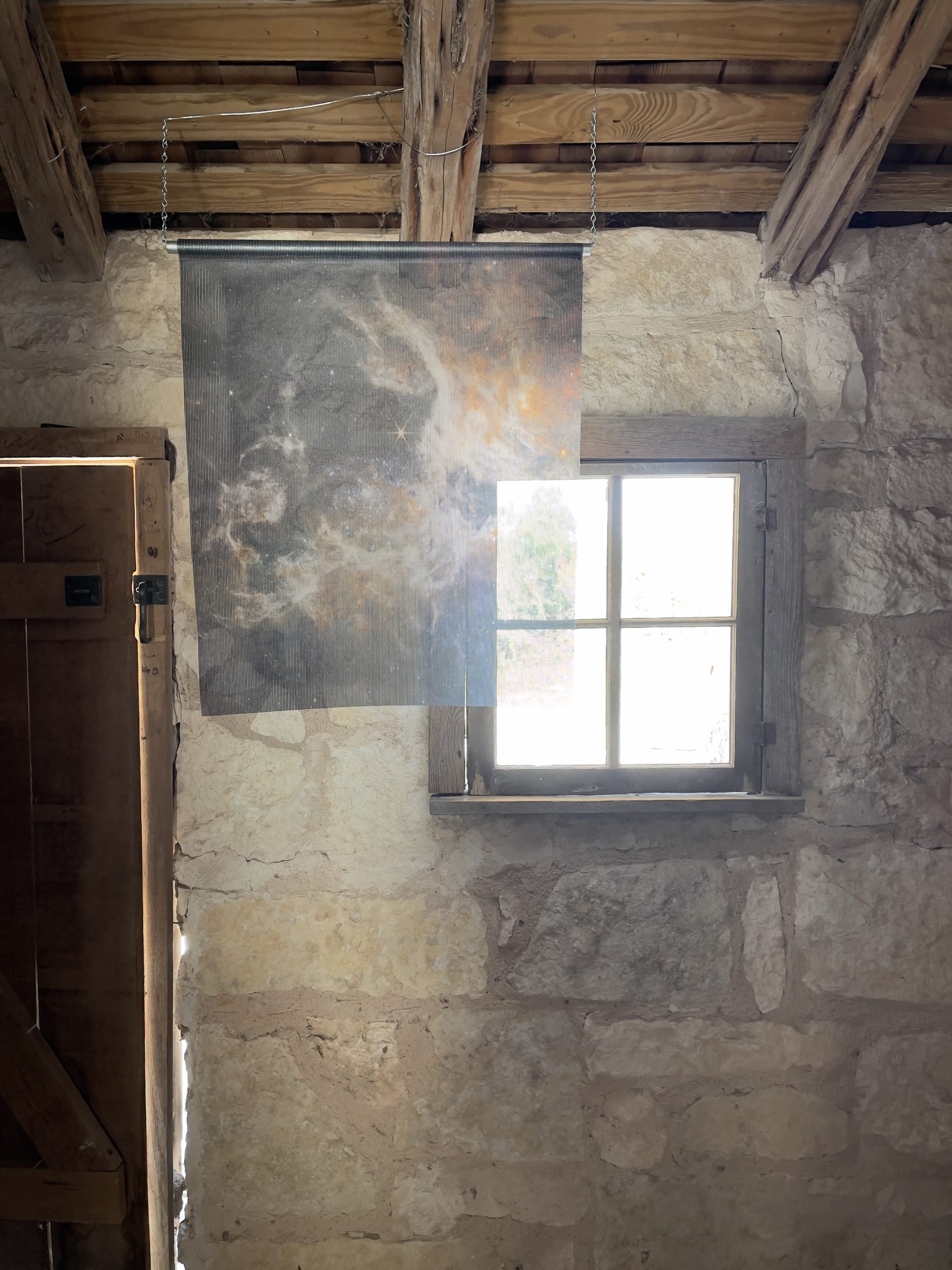
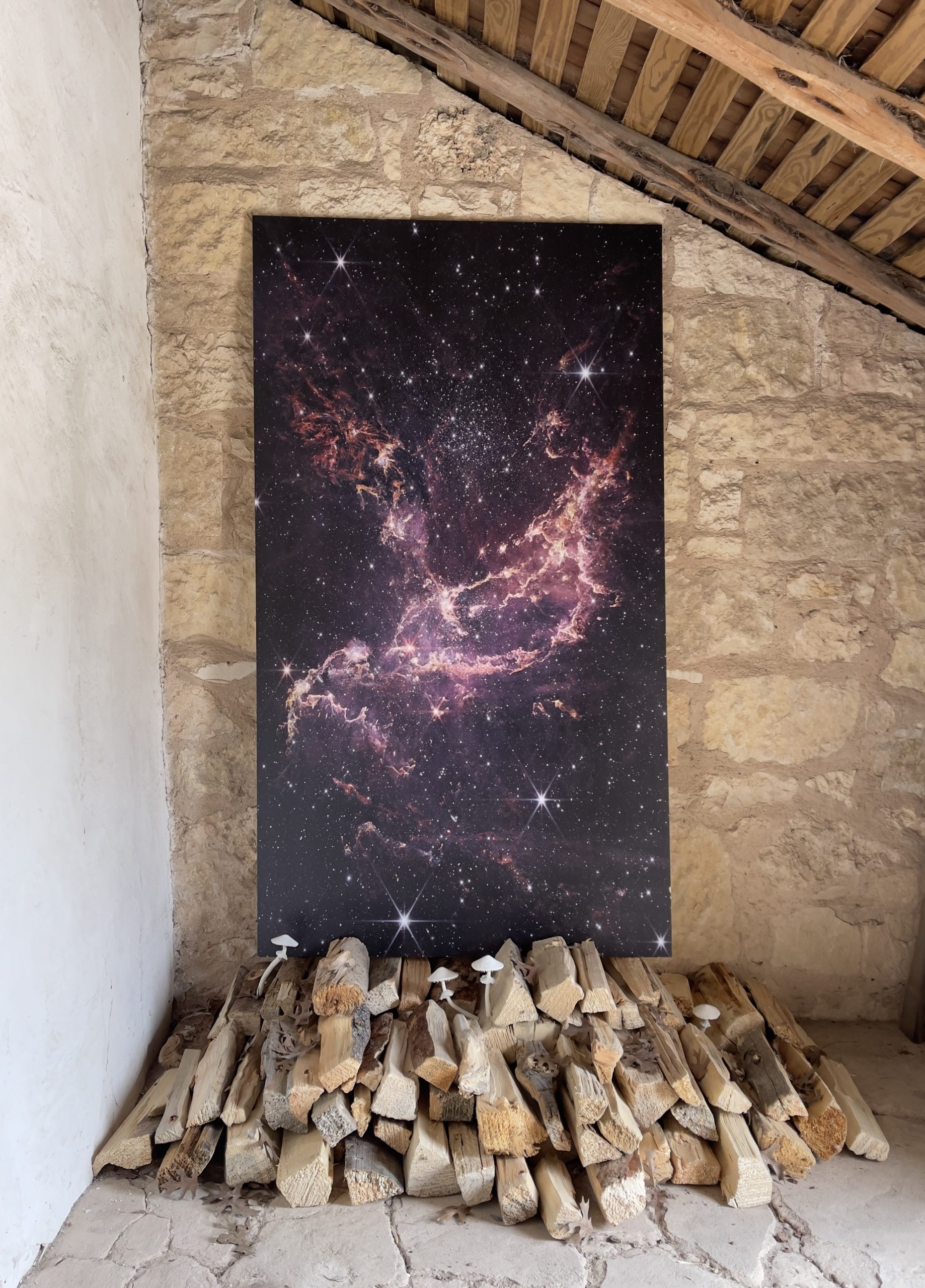
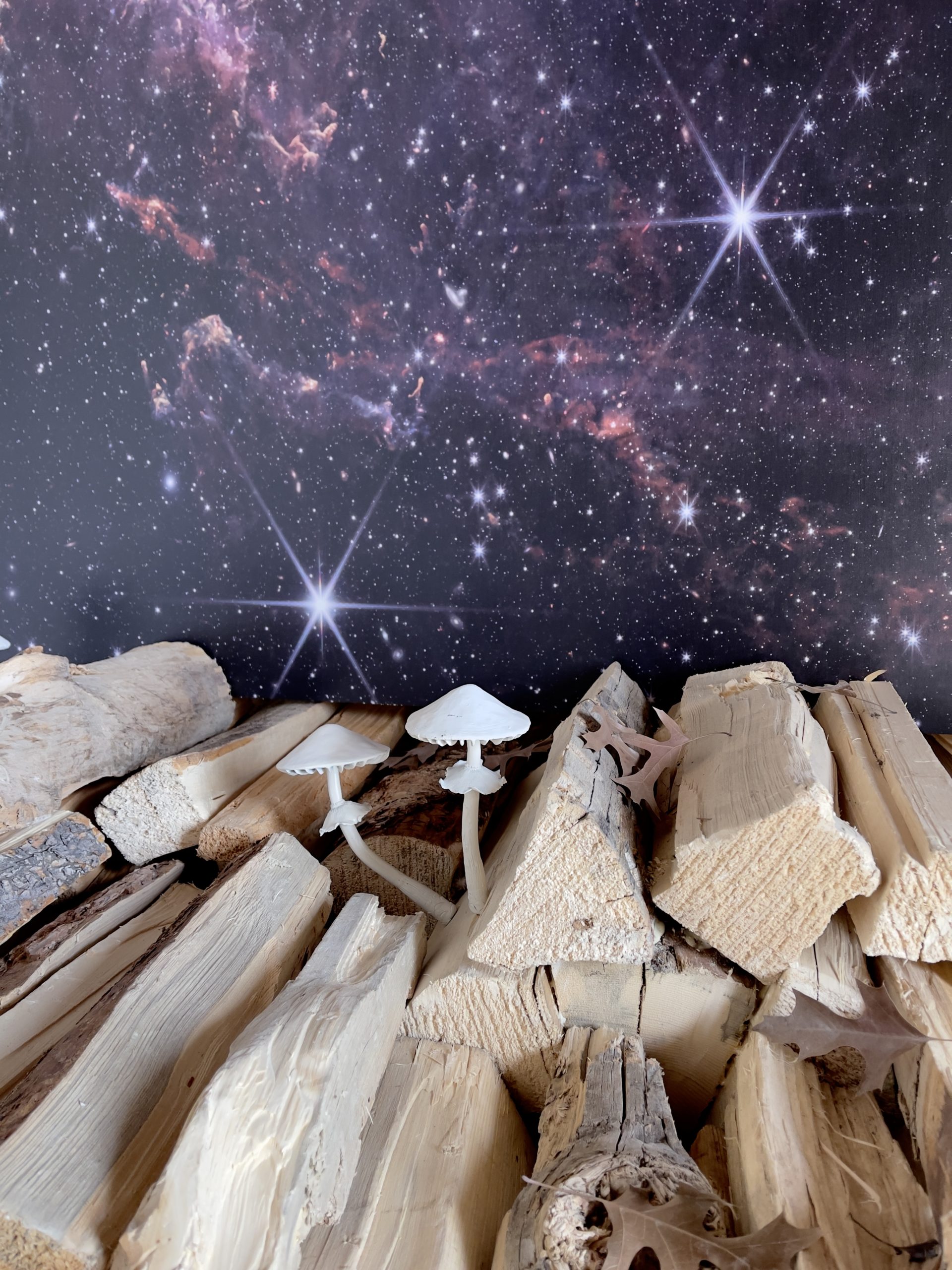
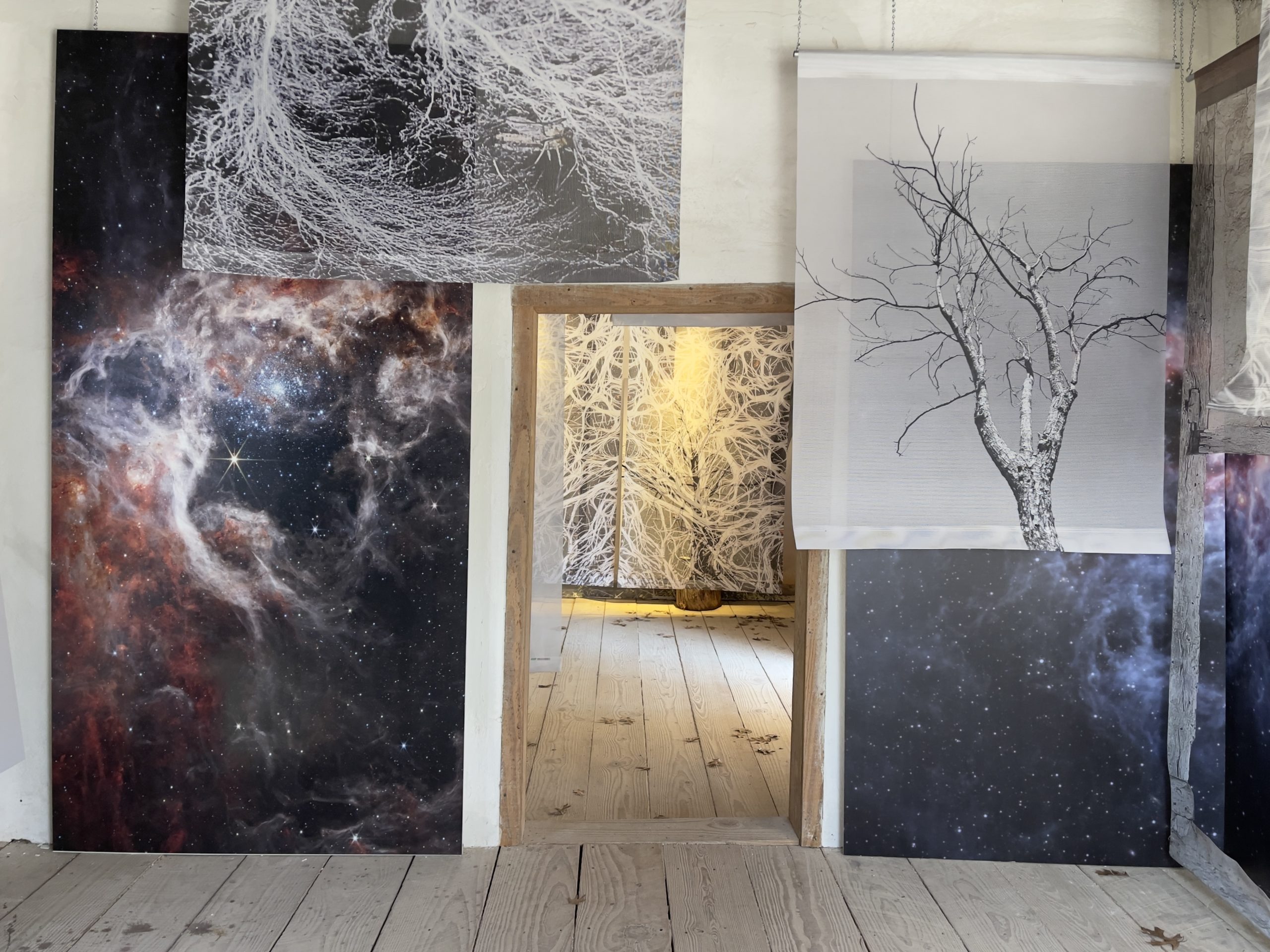
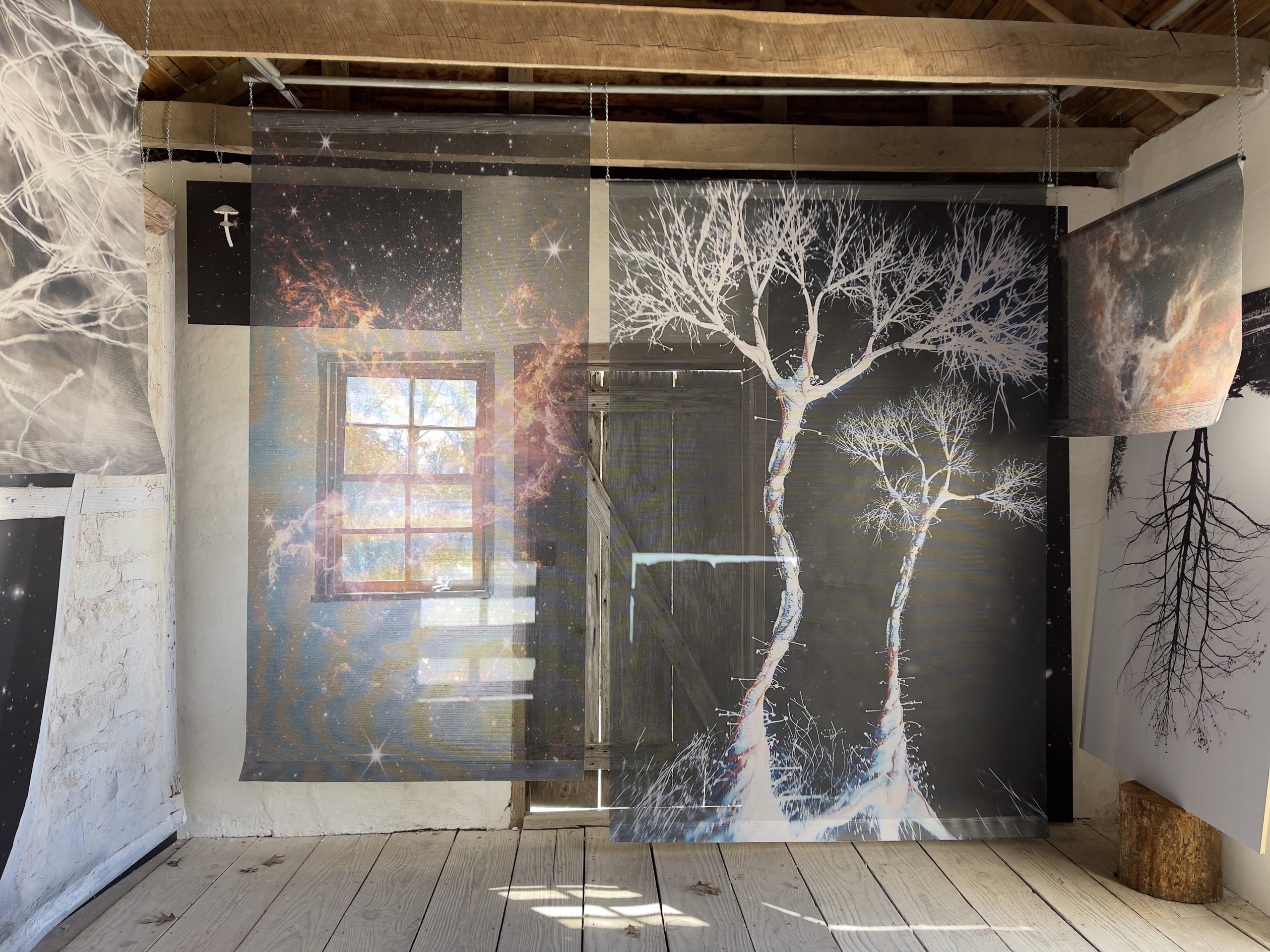
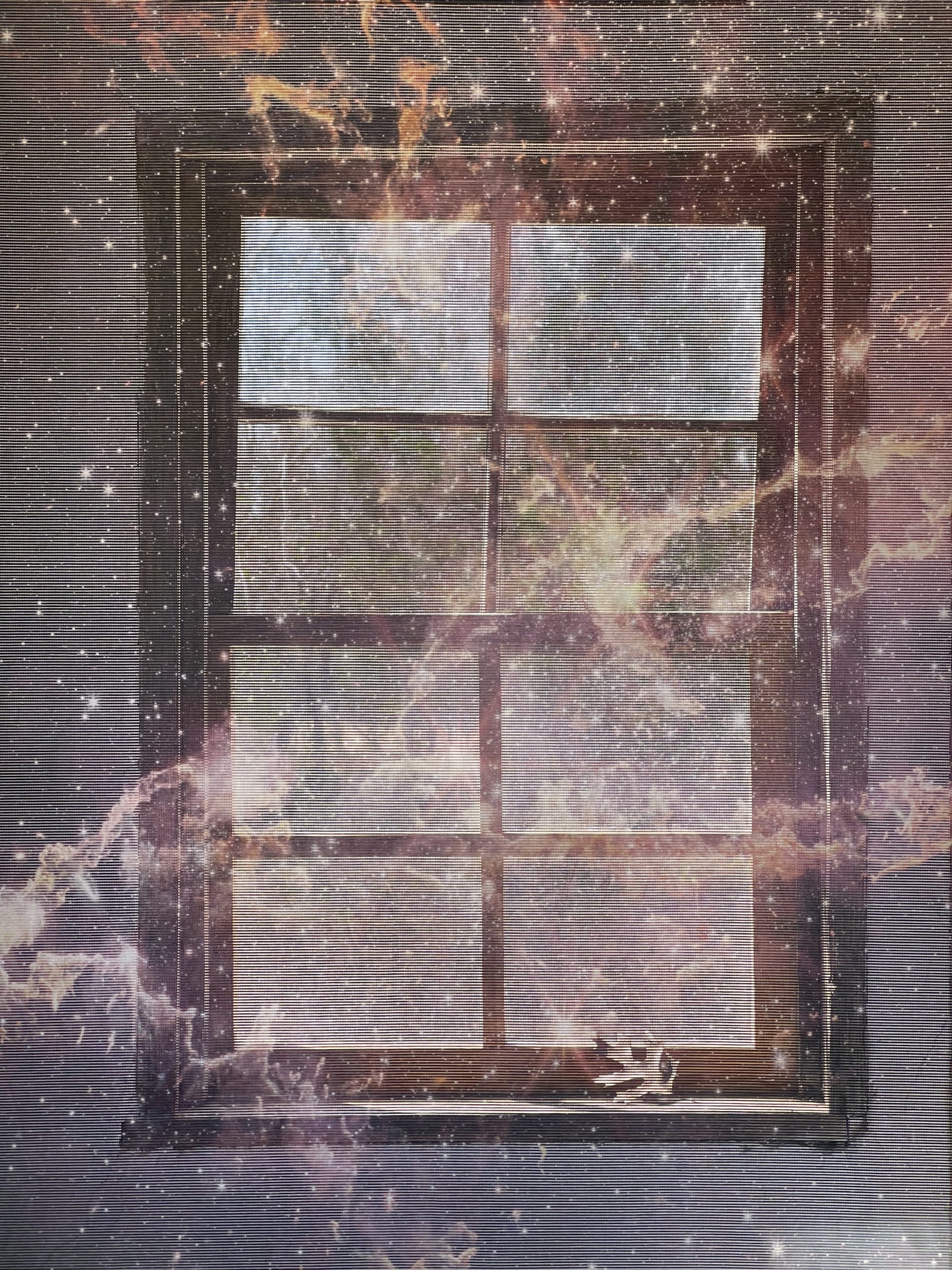
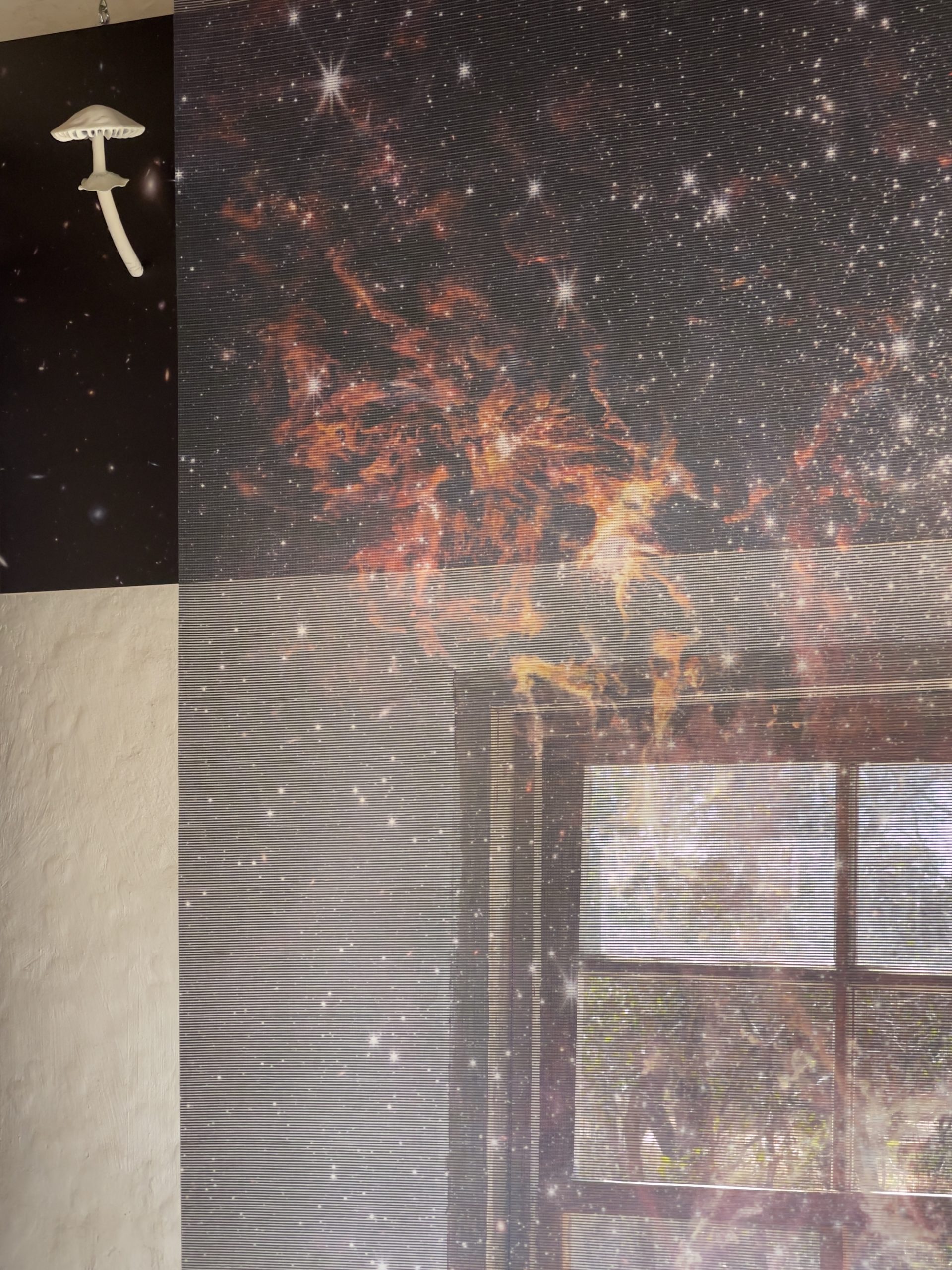
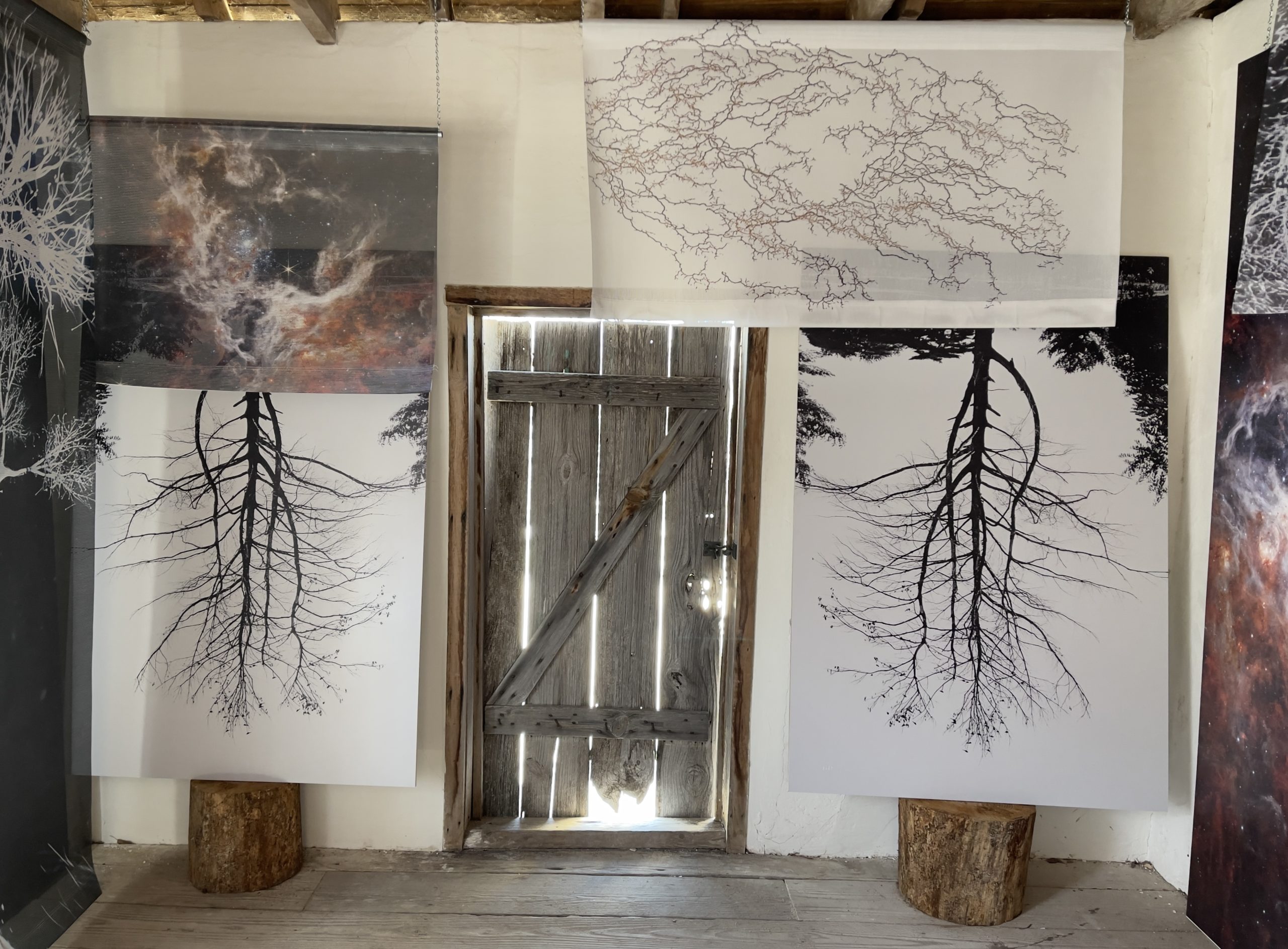
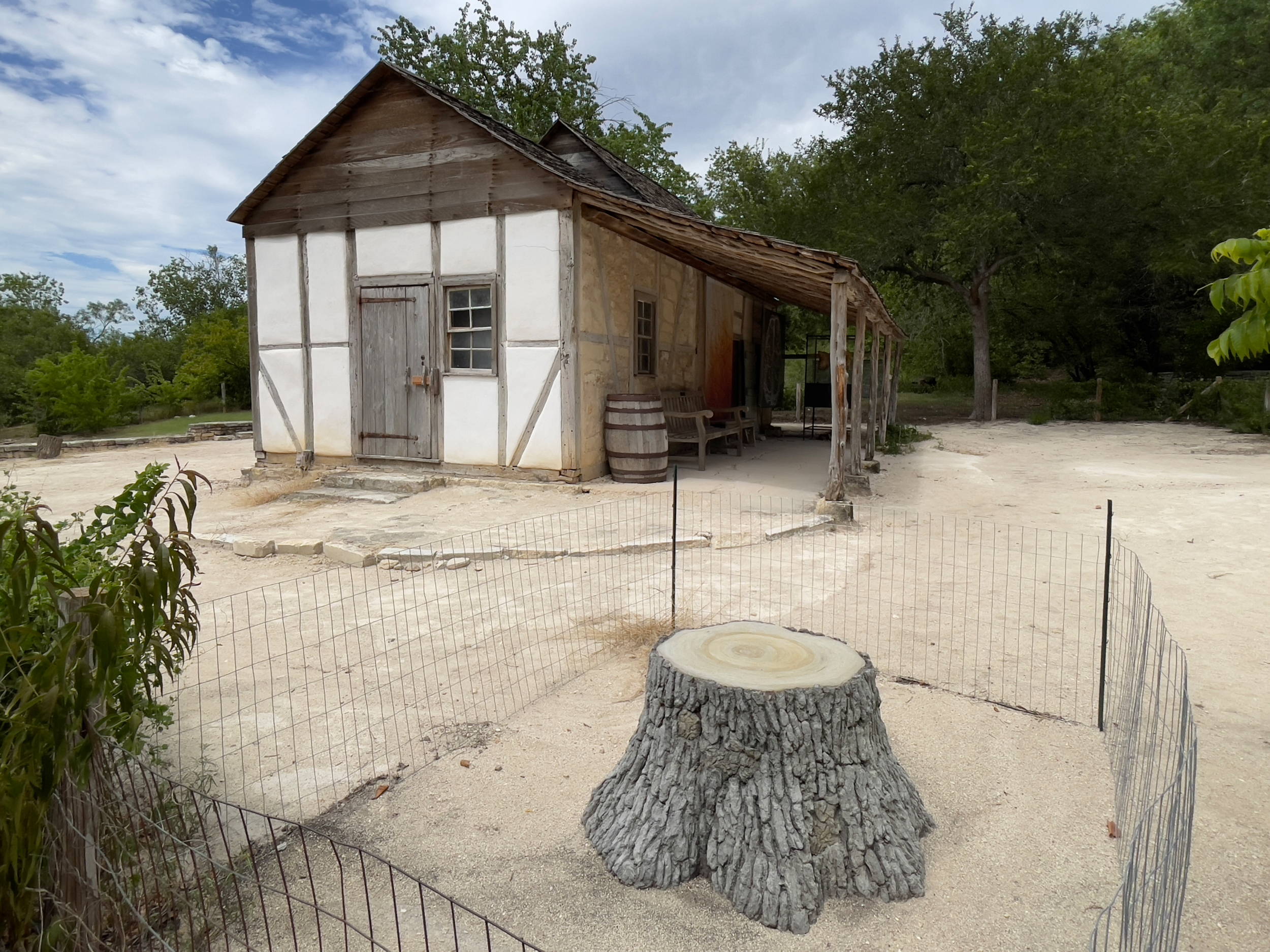
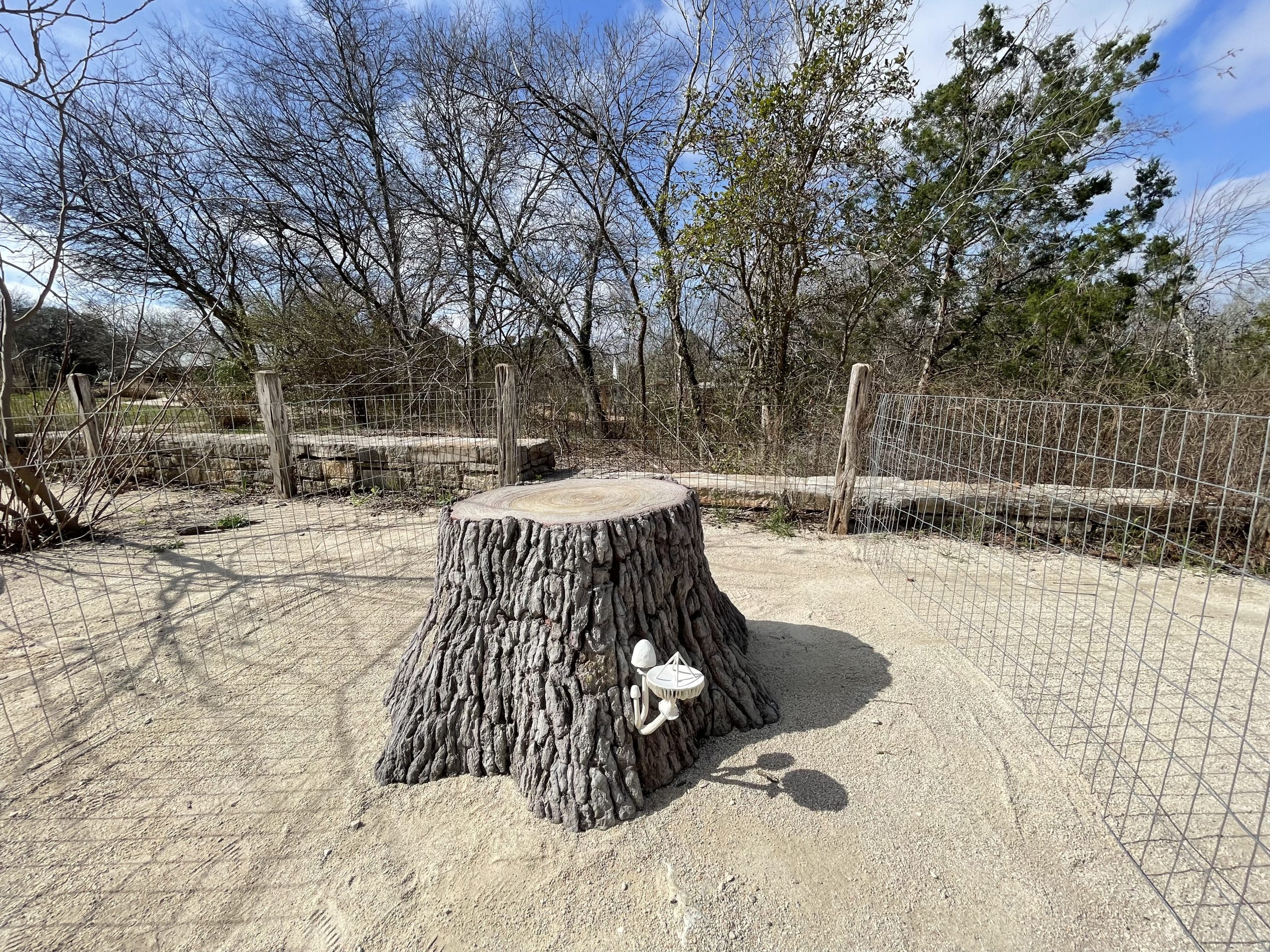
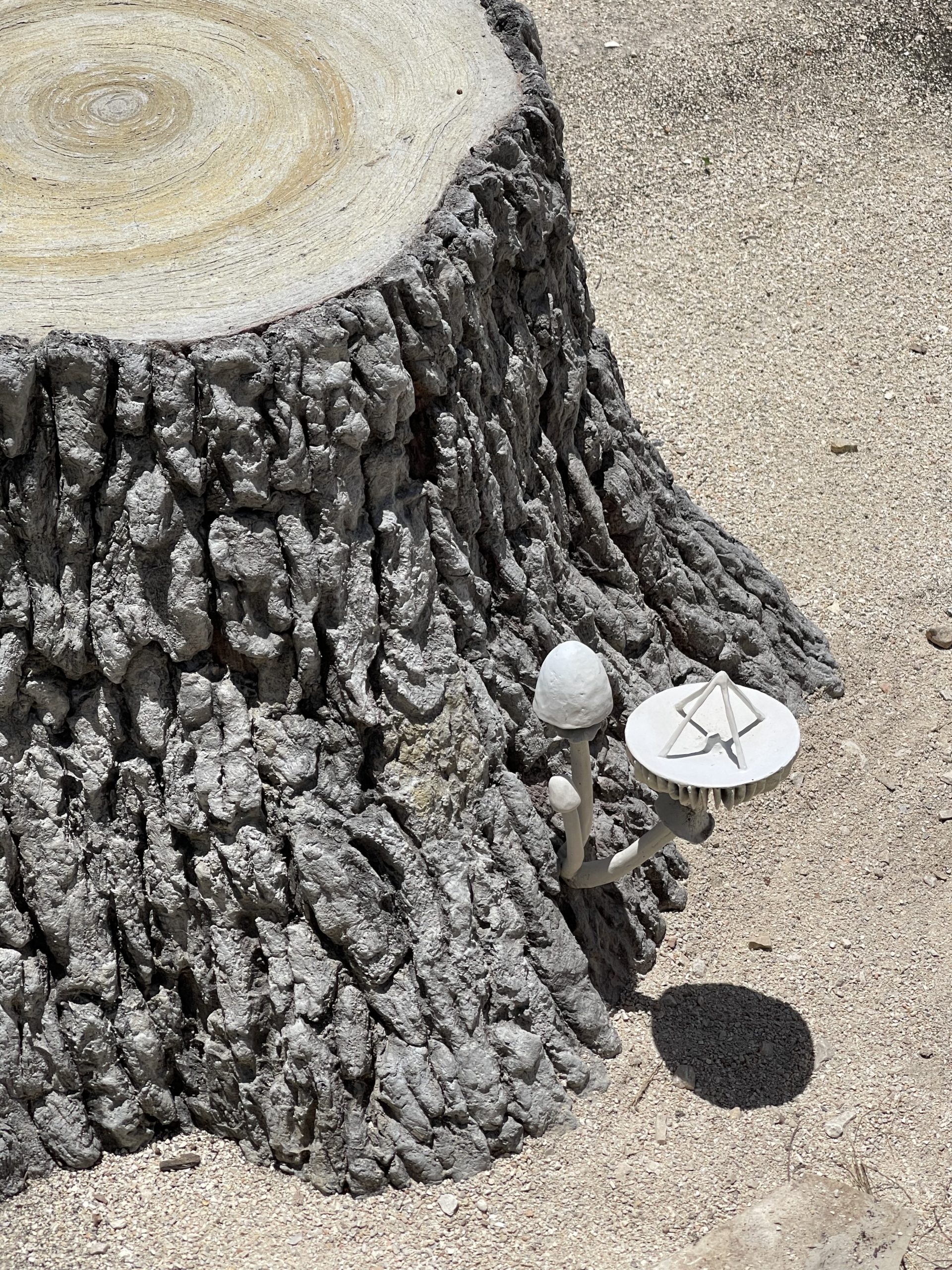
Within the Schumacher house hang images of tree roots, nerve clusters, fungal mycelium, nebulae, trees, distant galaxies, and the internal structure of the building itself printed on a series of mesh and wooden panels. On the front porch, stands a humidity and temperature controlled vivarium housing an enlarged claustrum made of oak. The claustrum is a structure in the human brain hypothesized to be the origin of consciousness. The sculpture has been inoculated with mushroom spawn and encouraged to grow mycelium throughout the run of the exhibition, eventually sprouting mushrooms. Just outside of the house is a faux bois (French for false wood) tree stump sculpture made of cement. Appearing to grow from the stump are white-capped mushrooms cast in bronze. One of the mushrooms resembles a miniature radio telescope dish. Radio telescopes listen for signals from deep space which help astronomers create a picture of the furthest and oldest parts of the universe.
In this work, connections are made between networks and processes within our bodies, to those under our feet, inside our structures, and far into space ranging from microscopic to colossal in scale. Oak used as the primary building structure for the house appears in additional stages and forms within the work (as tree stump, cordwood, wooden sculpture.) Mycelium, the root-like subterranean structure of fungus, uses the tree as a source of nourishment, but can also act as an unseen connector between trees. Beneath the surface, mycelium interacts with tree roots, moving chemical information from tree to tree, something akin to phone lines. The hidden structure of the fungus is reminiscent of the hidden structure of the house with its woven willow and oak beams and functions like our body’s nervous systems. The shape of the mushroom is used as a visual metaphor for radio telescope antennas, connecting the complexity of the fungal system with our scientific one as it attempts to understand and communicate with other worlds in deep space. The work asks viewers to think about the similarities between seemingly unrelated things-to see how humans are related to and part of the natural world, and to inspire awe at the complexity and wonder of the universe within, under, and around us.